
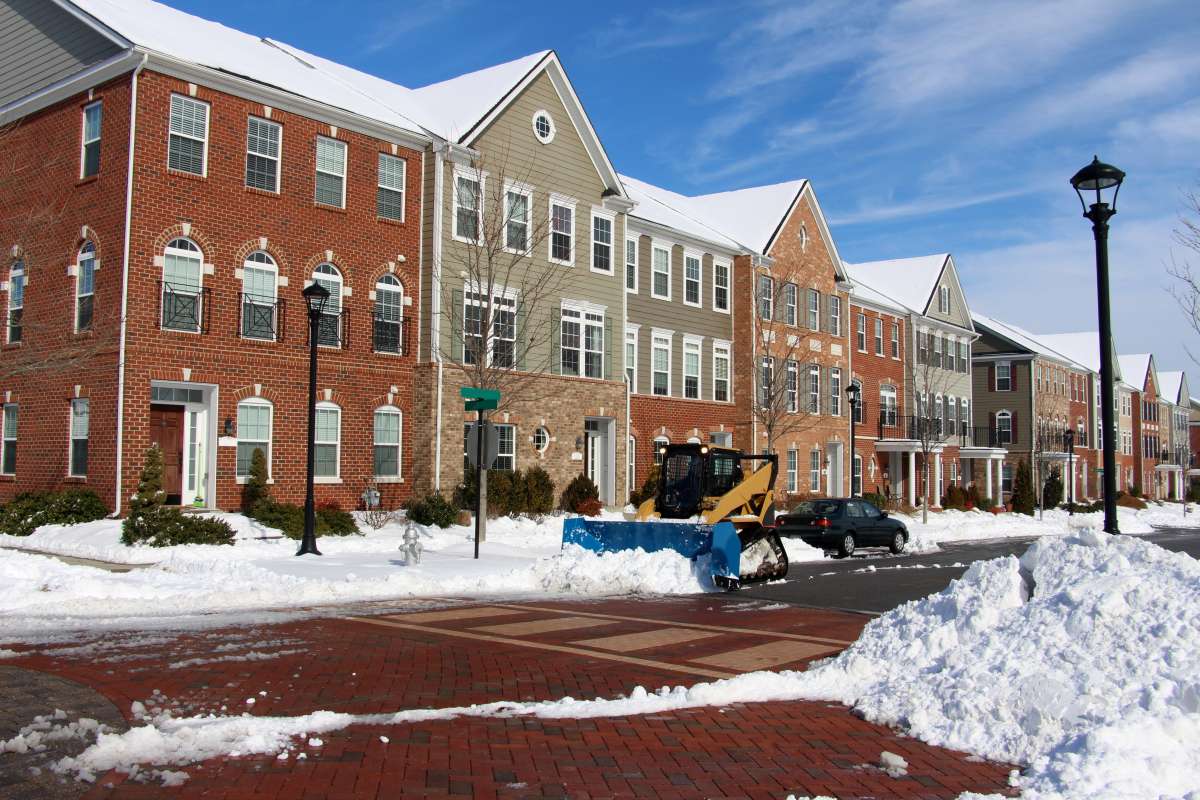
The first snowfall looks charming until someone cannot reach their front door, a plow has nowhere to put the next load, and three residents send photographs of the same icy corner. Winter has a way of testing the details that sounded perfectly clear during an autumn board meeting.
For Ontario townhouse condominium boards, snow removal involves much more than choosing a contractor. Private roads, front steps, visitor parking, shared walkways and individual driveways may all need different arrangements. A useful plan explains the work, the responsibility and the response when something does not go as expected.
This guide focuses on the decisions boards can make before winter arrives. It offers practical questions for management and service providers, not a universal contract or a promise of risk-free conditions. The objective is a community that understands its winter arrangements before anyone starts searching an email chain from last February.
Map Who Clears What
Begin with a site plan and the corporation’s documents, not a price for “full snow removal.” Mark the areas that require attention and establish who handles each one. A townhouse development can contain several different arrangements within a short walk. An assumption about the front steps can become a very visible gap once the snow arrives.
Confirm Responsibilities Before Writing the Scope
The Condominium Authority of Ontario’s explanation of what a condominium declaration establishes highlights its role in defining important maintenance and repair obligations. Have management review the declaration, description and relevant agreements before assigning work. Obtain legal advice where the documents leave a question unresolved.
Do not assume that exclusive use automatically means owner responsibility, or that everything outdoors belongs in the corporation’s snow contract. Identify the arrangements for driveways, steps, patios and shared access routes individually. Keep the operational summary consistent with the documents. A seasonal notice should explain existing obligations, not quietly create a new division of work.
Separate Municipal Service from Private-Site Service
Check where municipal maintenance ends and the corporation’s arrangements begin. Public sidewalks beside the property, internal walkways and private roads may follow different service expectations. Toronto’s guidance on snow and ice clearing on sidewalks and private property distinguishes municipal sidewalk service from property-owner responsibilities. Other municipalities have their own requirements.
Have management verify the rules and services that apply at your address rather than borrowing a neighbouring city’s deadline. Ask who deals with snow left across an entrance after a municipal plow passes. Put the answer into the plan and contractor discussion. “The city usually comes through” does not explain what happens on the corporation’s side of the boundary.
Where another corporation shares an entrance or route, confirm the arrangements with its representative as well. Compare the maps and contact lists, not just the contract titles. Ask who coordinates a response when a problem crosses the boundary. Resolving that question in advance helps the parties avoid competing instructions to different crews during the same event.

Write a Service Scope That Matches Everyday Life
A good scope describes how the contractor will serve the property, not just how many centimetres of snow trigger a visit. Walk the site together before finalizing expectations. Ask the provider to explain the sequence of work and any limitations. Invite questions while the pavement remains visible and everyone can point to the same corner.
Plan for People, Not Just Vehicles
Identify pedestrian routes between homes, parking spaces, mail areas and waste facilities. Include steps, ramps and other access features that apply to the site. Ask which tasks require hand work or different equipment. A plow clearing the main road does not describe the service for a narrow path beside a row of homes.
Discuss accessibility needs through an appropriate, confidential process. Review whether the service plan supports the routes people actually need, rather than treating every pathway as interchangeable. Where the board needs advice on accommodation or access obligations, consult the appropriate professional. Avoid expecting neighbours to provide essential access as an informal favour without a reliable arrangement.
Define Timing, Return Visits and Exceptions
Ask when the contractor starts work, how it prioritizes areas and what happens during a prolonged storm. Clarify whether the plan includes interim passes, a final cleanup and return visits after drifting or changing conditions. Distinguish snow clearing from ice treatment so a snowfall threshold does not become the only trigger anyone considers.
Discuss early and late-season events outside the normal contract period. Establish the process for requesting additional service and the person who can authorize it. Request realistic commitments rather than an appealing promise that the provider cannot explain operationally. Residents need an understandable service plan, not a guarantee that every surface will remain clear throughout every storm.
Test the proposed sequence against a hypothetical morning. Snow continues falling, residents need to leave for work and a pedestrian route requires attention before the final cleanup. Ask the provider to walk through its response and explain who receives updates. The exercise may reveal a missing handoff between machine clearing and hand work that the written scope does not make obvious.
Choose Contractors on More Than Price
A low quotation may reflect a different scope, different assumptions or fewer included visits. Ask management to compare proposals against the same written requirements. Note exclusions and unanswered questions before recommending a provider. The board should understand what each price buys and which responsibilities remain with the corporation or another party.
Ask How the Contractor Will Serve This Property
Discuss suitable equipment, pedestrian-area service, staffing and backup arrangements. Ask how the provider handles equipment failure or an absent operator. For a townhouse site with tight turns or narrow access, invite the contractor to explain its approach rather than assuming a larger machine will produce better results.
Request relevant references and ask about communication, follow-up and performance at comparable properties. Clarify whether subcontractors will attend and how the provider supervises their work. Record the agreed scope and escalation process in the contract documents. ICON’s overview of building operations and contractor coordination provides context for linking procurement with ongoing maintenance oversight.
Hold a service-start meeting after the board selects the provider. Confirm the current site plan, contact information, reporting method and instructions for special areas. Ask how the contractor gives those instructions to replacement personnel. A productive selection process loses value when the operator arriving at the property has a different map or an outdated set of directions.
Review Insurance and Applicable WSIB Documentation
Have the corporation’s insurance adviser review relevant coverage questions, including the proposed service and any subcontracting arrangements. Confirm the process for keeping documentation current. A certificate belongs in the review, but it should not replace questions about what coverage applies to the actual work.
The WSIB’s explanation of clearances for businesses and contractors describes how a clearance confirms registration and current reporting and payment status. Ask management to verify applicable WSIB requirements and obtain or confirm documentation as appropriate. Do not treat a clearance as proof of insurance coverage or as a substitute for assessing the contractor’s ability to deliver the service.

Make Room for Snow Before You Have Any
Snow storage deserves its own discussion. A site can have an excellent clearing plan and a poor plan for where the cleared material goes. Review proposed locations with the contractor before winter and mark them on the working site plan. Include what happens when those locations no longer provide enough capacity.
Choose Storage Locations Deliberately
Ask the contractor and appropriate advisers to consider entrances, drainage routes, visibility, utilities, landscaping and emergency access. Identify areas that the contractor must keep clear. Discuss how melting snow could affect nearby walking surfaces. The most convenient place for the plow may not be the best place for the community.
Clarify whether the contract includes relocating snow within the property or hauling it away. Establish pricing, approval steps and the conditions that would prompt that discussion. Do not wait until a snow pile blocks the agreed route before asking who can authorize removal. Include the storage plan in operator instructions so a replacement crew does not need to guess.
Check the plan against work that may continue into winter. A construction staging area, temporary fence or scheduled repair could remove space that the contractor expected to use. Ask management to communicate changes before the next visit and obtain a revised approach where necessary. Keep one current version of the plan rather than several conflicting sketches in separate inboxes.
Coordinate Parking, Collection Days and Contractor Access
Review how parked vehicles affect the service. Explain any existing parking requirements and the notice process for temporary arrangements. Ask management to verify the corporation’s authority and procedures before implementing restrictions or enforcement. A winter operations plan should not assume that a sign alone resolves every parking issue.
Coordinate waste and recycling collection with clearing schedules and snow storage. Ask how crews will reach the areas they need without leaving containers in a plow route. Plan for deliveries, visitor parking and other recurring activities. These details may sound small in October, but they become much more interesting when everyone wants the same narrow space on a snowy morning.
Treat Ice as Its Own Management Problem
A snow-free morning does not end the winter-maintenance conversation. Ask the contractor how it monitors and responds to icy conditions, including problems that emerge between snowfall events. Review recurring locations separately instead of simply adding them to the next plowing request. The response should match the concern, not the label on the contract.
Address Conditions, Not Just the Amount of Product
The Region of Waterloo’s guidance on winter maintenance practices and responsible salt use encourages property reviews, trained service providers and planning that reduces unnecessary salt use without compromising winter safety. It also highlights the importance of snow storage and understanding where ice forms.
Ask the contractor to explain its material choices, application practices and response to changing temperatures. Seek advice on suitable treatment for the site’s surfaces and conditions. Avoid prescribing an arbitrary amount of product or treating visible piles of salt as the measure of good service. Ask what result the treatment should achieve and how the provider checks the area afterwards.
Investigate Repeat Trouble Spots
Imagine a shaded walkway attracts repeated complaints even though the contractor attends regularly. Ask management to coordinate a review of the location and service history. Does the team need another inspection, a different response schedule or professional investigation of a drainage concern? The useful question is why the issue keeps returning.
Track corrective actions and agree on follow-up. Share relevant findings with the contractor so its team understands what has changed. Do not rely exclusively on residents to discover every problem. Establish monitoring arrangements that fit the site, its service model and professional advice, then review whether those arrangements work in practice.

Plan Oversight, Costs and Incident Reporting
Signing the contract begins the working relationship; it does not complete the board’s winter planning. Agree on who reviews performance, who receives concerns and how the corporation responds to unresolved issues. This matters especially where a townhouse community has no daily on-site employee. The plan needs named responsibilities without depending entirely on one volunteer director’s availability.
Understand the Difference Between Delegation and Oversight
Ontario’s Occupiers’ Liability Act and its provisions on reasonable care and contractors set out an occupier’s general duty of reasonable care and address circumstances involving independent contractors. Hiring a provider does not automatically settle every liability question. The facts, contract and applicable law matter, so seek legal advice for the corporation’s circumstances.
As a practical governance step, ask management to explain how it evaluates the provider and follows up on the work. Record concerns and the response. Avoid assuming that either outsourcing or a particular inspection schedule guarantees protection from a claim. The board’s focus should remain on a reasonable, workable process and appropriate professional guidance.
Build the Budget Around the Actual Service
Review included services, extra-work rates, payment timing and any limits on visits or materials. Ask how repeated storms, additional hauling or an out-of-period event could affect spending. Compare scenarios using the proposed contract, not an unsupported percentage added to last year’s expense.
ICON’s guide to condominium budget planning in Ontario explains the importance of connecting costs with operational needs. For winter service, establish approval authority for extra work and an after-hours escalation process. The person coordinating an urgent response should know how to obtain a decision without sending the same request to every director separately.
Ask management to reconcile additional charges with the service record and agreed rates. Where the scope changes, document the approval and explain the financial effect in the next board update. This gives directors a clearer picture of spending during the season. It also helps the next budget reflect actual service needs rather than an unexplained year-end total.
Keep Records That Support Follow-Through
Agree on practical service records, including the date, location, conditions, work completed and any follow-up concern. Ask how management will review exceptions or missed areas. ICON’s guide to monthly condominium management reports offers a useful framework for bringing outstanding work and required decisions to the board’s attention.
Establish an incident-reporting process before anyone needs it. Arrange immediate assistance where appropriate, notify the relevant contacts and preserve factual information through authorized channels. Follow the insurer’s reporting requirements and legal advice. Avoid speculation about fault, public discussion of personal details or promises about the outcome of a possible claim.
Keep ordinary service concerns easy to report as well. A resident who notices an untreated path should know how to identify the location and receive an acknowledgement. Confirm who checks that the requested follow-up occurred. An efficient reporting process should help management correct a gap without requiring the resident to repeat the same concern to several people.
Explain the Plan and Test It in Practice
Residents do not need the entire contract in their inbox. They need a clear explanation of the arrangements that affect daily life. Prepare an initial seasonal notice and identify how management will communicate changes. Keep the message consistent with the documents, contract and actual response process so the board does not promise one service while purchasing another.
Make the Resident Notice Useful
Explain which areas the contractor covers, what residents need to keep clear and how to report an untreated location. Describe relevant parking arrangements and the contact for urgent concerns. Avoid a vague instruction to “contact the board” when management or an emergency service should receive the first call.
ICON’s guidance on clear condominium communication and practical resident notices supports an approach that gives people understandable information and next steps. Reach tenants and other occupants as well as owners. Offer an appropriate way to raise access concerns privately, and make important instructions available through suitable channels beyond a single portal announcement.
Review the First Significant Winter Event
After the first substantial event, ask management and the contractor what worked and what needs adjustment. Review the complete journey from each affected area to the shared routes, not only whether the main road looks clear. Compare concerns with the agreed scope and identify the next action.
Consider a hypothetical site where the contractor clears a route to the mail area but residents cannot cross the ridge left at its entrance. The board should seek a coordinated fix and updated instructions, not settle for separate assurances that each crew completed its assigned section. Record the lesson while the details remain fresh and carry it into future service reviews.

Plan the Details Before Winter Tests Them
Effective townhouse condo snow removal starts with a clear understanding of responsibilities and the property itself. Define the work, assess the contractor, agree on storage and access arrangements, and prepare for ice as well as snowfall. Connect the service plan to a realistic budget and a practical process for monitoring and follow-up.
Then explain those arrangements in language residents can use. A strong plan tells people what to expect, what they need to do and where to report a concern. It also gives management and the contractor a shared basis for addressing gaps when conditions change.
No board can negotiate with the weather. It can, however, replace assumptions with decisions before the first storm arrives. That leaves the community better prepared for winter and gives directors a much better reason to admire the snowfall from indoors.